


 Language
หากคุณต้องการความช่วยเหลือใด ๆ โปรดติดต่อเรา

วิธีเลือกถาดเคเบิลที่เหมาะสมสำหรับโรงงานอุตสาหกรรม
Selecting the appropriate cable tray for industrial environments requires careful consideration of load capacity, material, corrosion resistance, cable type, and installation conditions. Below is a step-by-step guide to help you make the choice.
1. Determine the Cable Tray Type
Industrial plants typically use these four main types of cable trays:
| Type | Best For | Advantages | Limitations |
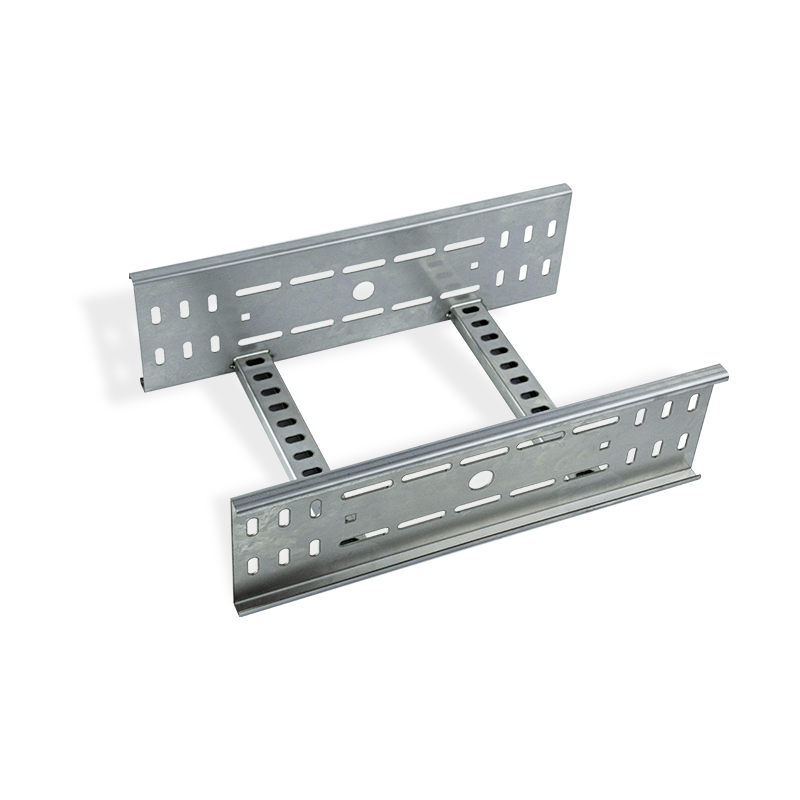
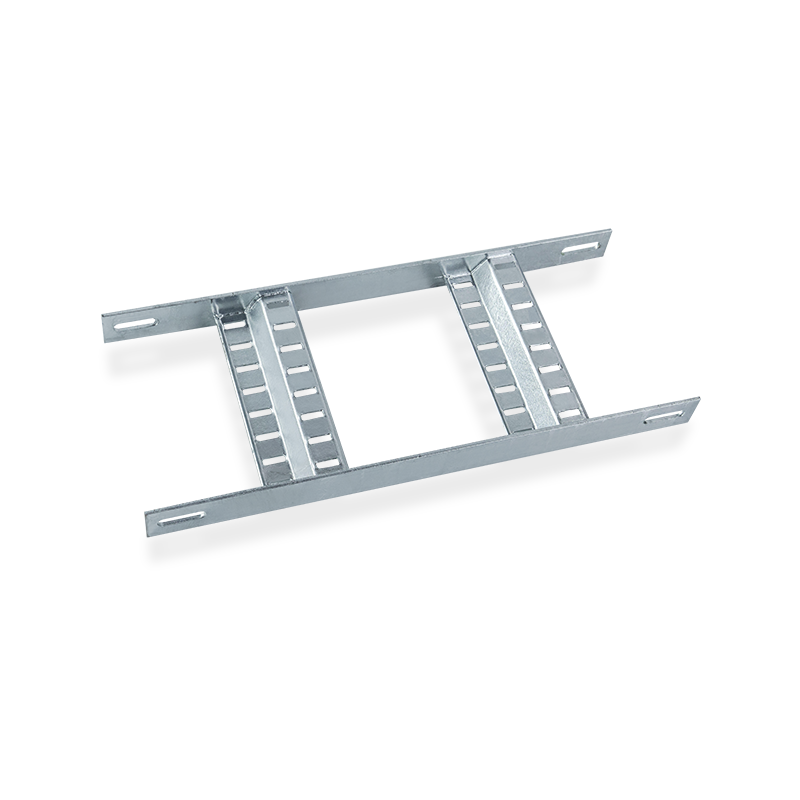
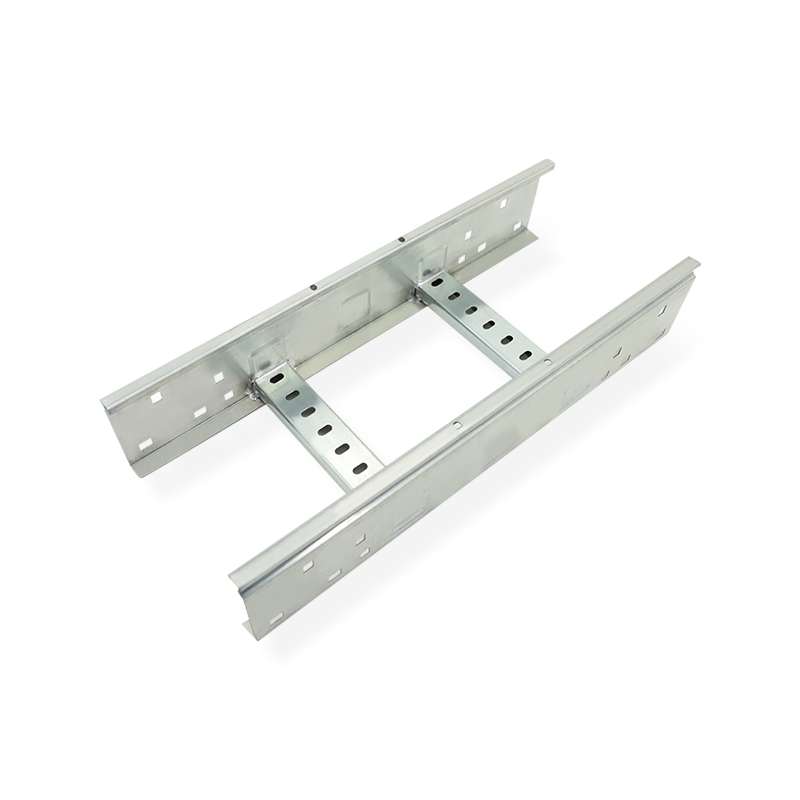
| Ladder Cable Tray | Heavy power cables, long spans | High strength, good ventilation | Open design offers less protection |
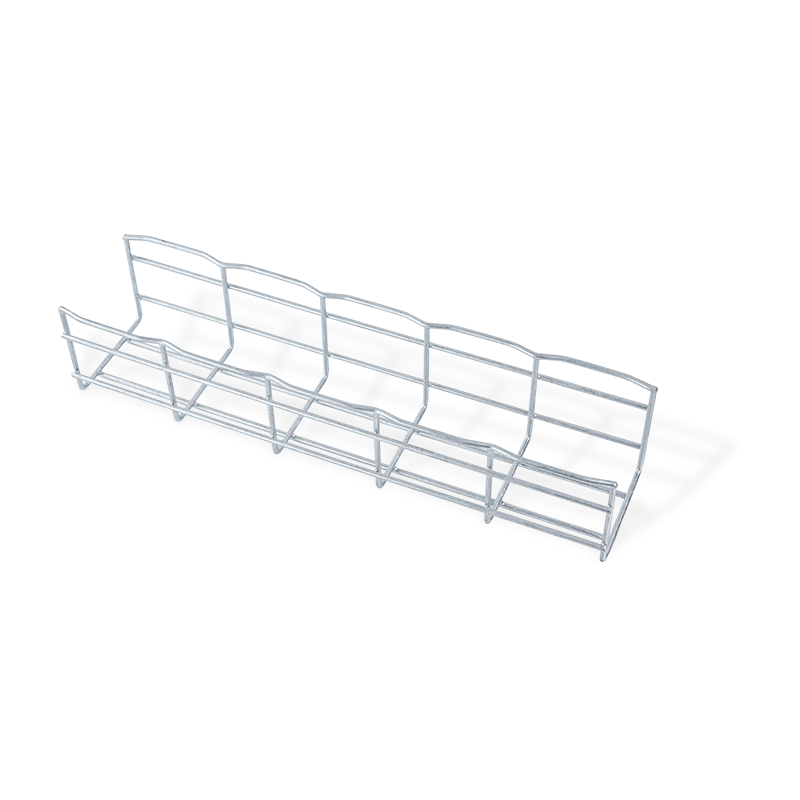
| Wire Mesh Cable Tray | Light to medium cables, data centers | Lightweight, airflow | Lower load capacity than solid trays |
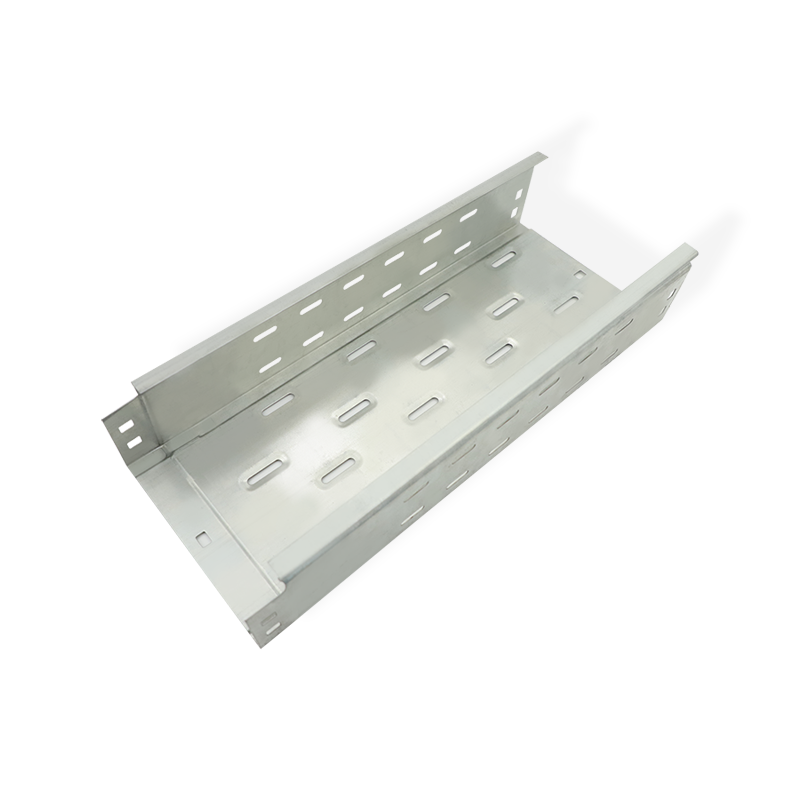
| Solid Bottom(Through)Cable Tray | Sensitive cables, dust-prone areas | Full cable protection, good for | Poor heat dissipationvertical runs |
| Channel Cable Tray | Small cables, control wiring | Easy to install, cost-effective | Limited cable capacity |
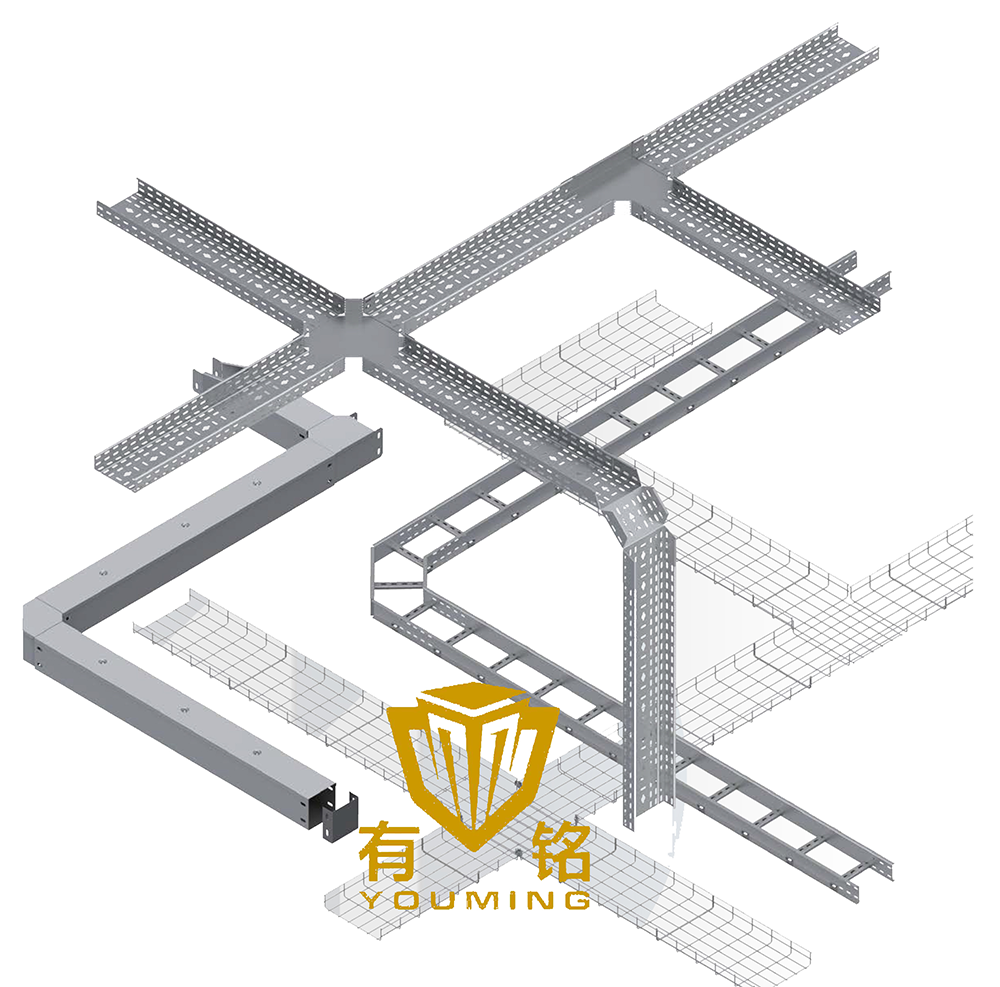
Industrial Recommendation:
- Power & Control Cables → Ladder or Solid Bottom Tray
- Data & Fiber Optic Cables → Wire Mesh or Perforated Tray
- Harsh Chemical Environments →Stainless Steel or FRP Tray
2. Consider Material & Corrosion Resistance
Industrial plants often have moisture, chemicals, and high temperatures, so material selection is crucial:
| Material | Best For | Pros | Cons |
| Galvanized Steel | General industrial use | Cost-effective, durable | May corrode in harsh chemical areas |
| Stainless Steel (304/316) | Chemical plants, offshore, food industry | Excellent corrosion resistance | Higher cost |
| Aluminum | Lightweight needs, non-magnetic areas | Rust-proof, easy to install | Lower load capacity |
| Fiberglass (FRP) | Highly corrosive areas (acid/alkali) | Non-conductive, chemical-resistant | Expensive, lower fire rating |
Industrial Recommendation:
- Standard Factories → Hot-Dip Galvanized Steel
- Chemical Plants → Stainless Steel 316 or FRP
- Outdoor/High Humidity →Powder-Coated or Aluminum
3. Calculate Load Capacity & Cable Fill
Industrial cables can be heavy, so ensure the tray can support the weight:
Load Capacity Guidelines:
- Light Duty: 50–100 kg/m (control cables)
- Medium Duty: 100–200 kg/m (power cables)
- Heavy Duty: 200–500 kg/m (HV cables, mining plants)
Cable Fill Ratio (NEC/IEC Standards):
- Power Cables → Max 50% fill
- Control Cables → Max 70% fill
- Avoid overloading → Prevents overheating & maintenance issues
Industrial Recommendation:
- Use ladder trays for heavy cables (long spans).
- Use solid-bottom trays where cable protection is critical.
4. Environmental & Safety Factors
Industrial plants have unique challenges:
Corrosion Resistance → Choose stainless steel or FRP in chemical zones.
Fire Protection → Use fire-rated trays (UL/CE certified) in high-risk areas.
Impact Resistance → Heavy-duty trays for mining, oil & gas.
EMI Shielding → Aluminum or steel trays for sensitive electronics.
Industrial Recommendation:
- Oil & Gas → Stainless Steel Fireproof Coating
- Food & Pharma → Sanitary SS 316 Trays
- Mining & Heavy Industry →Extra-Thick Galvanized Steel
5. Installation & Maintenance Considerations
- Modular Design → Faster installation (e.g., quick-clip systems).
- Accessibility → Open trays (ladder/mesh) for easy cable additions.
- Support Spacing → Typically 1.5m–3m (adjust based on load).
- Expansion Joints → Needed in high-temperature areas.
Industrial Recommendation:
- Pre-plan cable routes to minimize bends and supports.
-Use perforated trays where ventilation & accessibility are key.
Final Checklist for Industrial Cable Tray Selection
1. Type → Ladder / Mesh / Solid / Channel
2. Material → Galvanized / Stainless / Aluminum / FRP
3. Load → Light / Medium / Heavy duty
4. Corrosion → Standard / Chemical-resistant
5. Fire Safety → Does it meet local codes
6. Installation → Easy to assemble & expand
Pro Tip: Consult with us for custom solutions in environments (e.g., high heat, explosive areas).
---
Conclusion
Choosing the right cable tray for industrial plants ensures long-term safety, efficiency, and cost savings. Match the tray to your cable type, environment, and load requirements for performance.
Need Help? Contact us for free layout design & load calculations!
Would you like recommendations for specific industries(e.g., petrochemical, automotive, power plants) we can tailor the advice further!

Youming Group เป็นกลุ่มบริษัทการผลิตที่ดำเนินธุรกิจหลักในการวิจัยและพัฒนาถาดสายเคเบิลความแข็งแรงสูงใหม่
ลิงค์ด่วน
สินค้า
ข้อมูลการติดต่อ
-
No.36, เขตอุตสาหกรรม Taidong เมือง Shiyan, เมือง Dongtai, มณฑลเจียงซู
